This Food in History #31 Tteokbokki
Hello and welcome to another episode of This Food in History! Today we’re heading to South Korea to take a look at the street food treat, tteokbokki!
I spent many an hour watching people munch tteokbboki on Korean dramas and was influenced to finally try some. I found a microwave version thanks to a local international market, Jungle Jims. I have been enjoying this version, wishing I could try authentic, on the street variants, but until I can finally go to Korea, we’ll just look into the history of tteokbbokki instead!
Tteokbboki is a simple dish containing at minimum a tubular rice cake, and a sauce. The default version today, uses a spicy red pepper sauce, gochujang, fish cakes, onions, and sometimes a boiled egg. There are many variants we’ll cover later. The rice cake is called tteok and it has been around for a very, very long time. They seem to make an appearance in the Three Kingdoms period, which stretched from the 1st century BC to the 7th Century CE. I found mention that in old literature and relics, tteok emerged from prehistoric methods for threshing multigrain that was baked sans cooking utensils. Tteok was steamed and flours and herbs were used with it for nutrition and aesthetic.
We’re going to jump from this emergence of rice cakes to the Joseon Dynasty which was between 1392-1910. We’ll be looking at the royals for this as one legend is that tteokbokki was created to help regain the King’s lost appetite. This version of tteokbokki is the first time we see it and it’s made with pine nuts, sesame oil, and sirloin. This version is referenced as Gungjung tteokbokki, and Gungjang means royal court. It was served at banquets and supposedly described as a favorite of the nobility according to the Jeungbo Sanrim Gyeongje, an agricultural encyclopedia which also mentions its adaptability to many variations of sauces and seasonings.
I have one side that says this version uses soy sauce, and was stir fried. It’s also theorized that it is inspired by another dish, japchae which is stir-fried noodles and vegetables. Alternative names for this version includes tteokjapchae as it’s made similar. However I have another account that states this version was not stir fried.
While it is supposedly mentioned in the 18th century encyclopedia, most sites quote the first record actually being in the 19th century in a cookbook, Siŭijŏnsŏ (Siuijeonseo). It mentioned multiple names for the dish like tteokjjim (steamed rice cakes) tteok-japchae (stir-fried rice cakes), and tteok-jeongol (rice cakes hot pot.) We also are looking at a mention of a soy sauce based version being made in the head house of the Papyeong Yun clan who was known for high quality soy sauce brewing. There are up to eight or maybe ten other cookbooks that mention tteokbboki around this time as well. One is a palace archive that states King Youngjo and his mother enjoyed it.
So how does this royal dish go to a high class luxury meal to the beloved street food of today? The 20th century. By the 1930s, we had it out of the royal courts but it is a luxury dish that only a few members of society can enjoy. The sirloin inclusion is a market of wealth as meat is expensive. It is still the soy based variant that is stir fried. The next leap will happen in the 1950s.
We get to see a few different changes in this decade. The first is the result of the Korean War of 1950-53. In 1954 the Agricultural Trade Development and Assistance Act was passed that had the United States supplying Korea with surplus agricultural products like flour. This created a rice scarcity and flour surplus in the country. Koreans learned to make their tteok with flour and the creation of garae-tteok which is the long cylindrical rice cake. Today you can find versions made with either rice flour or wheat flour. This does change the texture of the garae-tteok.
The 1950s also bring us the first time tteokbokki is used as a deep fried new years dish and the last notable change, the use of gochujang based sauce instead of soy. This is thanks to Ma Bok-rim. She created the spicy version, famously by accident. It’s said that she dropped a rice cake into another dish that was using a spicier sauce. This was either her father in law’s jajangmyeon, (noodles with a black bean sauce), or during the opening of a Korean-Chinese restaurant. Either way, she then started experimenting with sauces and landed on the gochujang sauce that is most commonly and famously used today. She went on to open Grandma Ma Bok-rom’s Tteokbokki in Shindang which is now known for tteokbokki in Seoul.
Chef Marciel Gentile, author of Maricel’s Simply Asian Cookbook described it this way: “Sindang-dong Tteokbokki Town, in Seoul, is in the Jung-Gu district and is a must visit for anyone visiting Seoul [who] is a tteobokki fan. It is where it originated and where, in the 1970s and 1980s, it came to fame."
We start seeing it not only in restaurants but street vendors get in on the dish. Vendors start adding fish cakes, boiled eggs to flesh out the dish a bit more. It’s a social dish that people can share and as we move forward toward the present day we start seeing more and more variations of tteokbokki.
Haemul-tteokbokki is a seafood version that uses things like shrimp and squid.
Noodle tteokbokki uses noodles and you can find it as ra-bokki with ramen noodles or jjol-bokki with wheat noodles.
Galbi-tteokbokki uses beef short ribs.
Curry tteokbokki uses a curry sauce base.
Cream sauce tteokbokki uses a cream sauce with bacon instead of the fish cakes.
Mala tteokbokki fuses with Chinese malatang ingredients. Malatang means numbing spicy soup and has vegetables, meats and noodles in a specifically spicy broth.
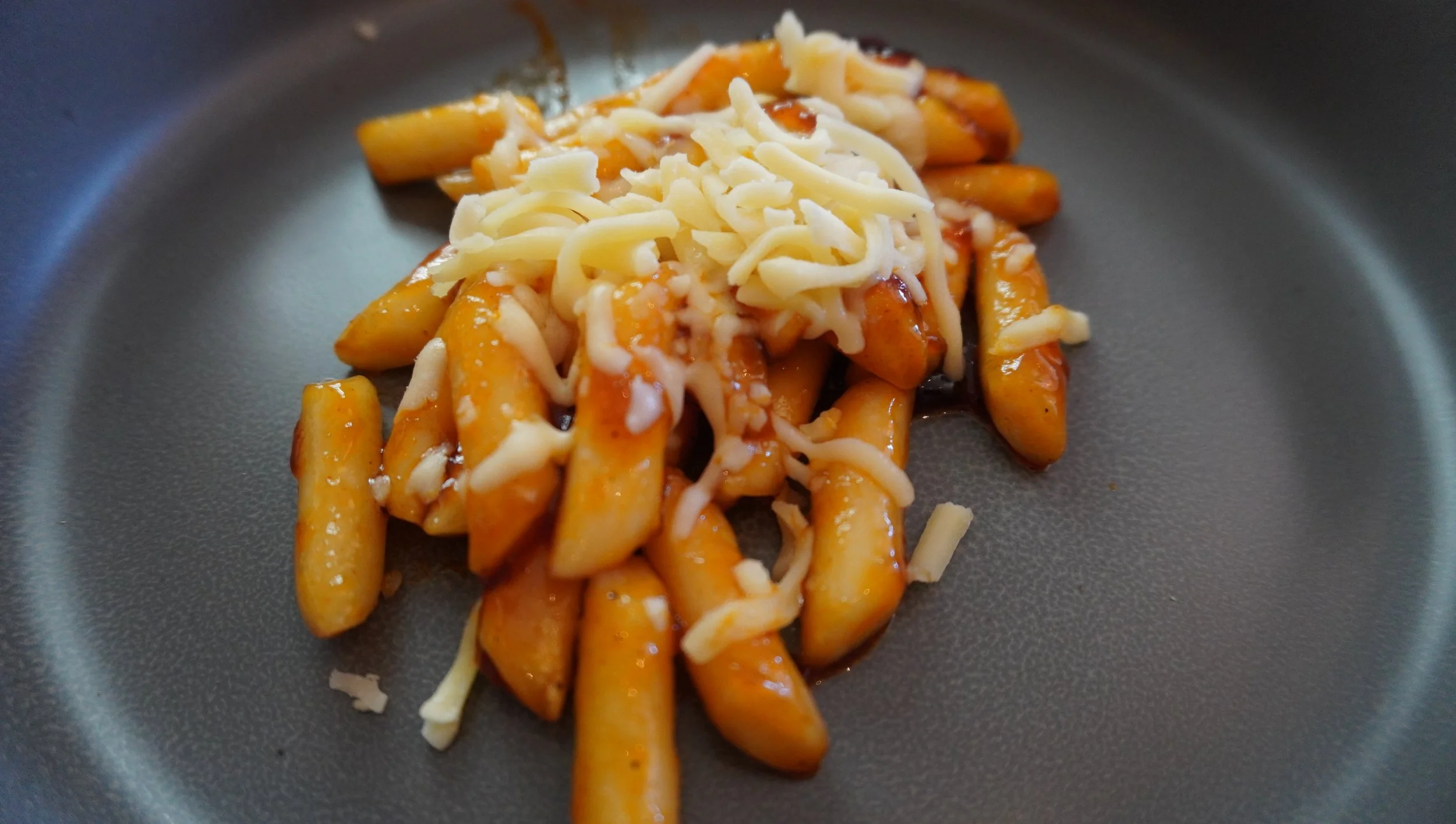
Cheese tteokbokki is either stuffed or topped with cheese, and is my favorite variant
And sweet red bean tteokbokki that uses a sweet red bean flavor.
Tteokbokki became extremely popular and common in Korea and has made its way internationally as well. From 2018 to 2020 the global consumption increased 37% according to Statista in 2020. It spread to North Korea in 2017 and became popular but was banned in 2024 with budae-jjigae for its origins.
Tteokbokki is a comfort street food these days with Royal origins and you can find it on the shelves of most chain grocery stores in the states, not just with street vendors and restaurants in Korea. It has become globally recognized and you can find many varieties to enjoy. This has been This Food in History, I’m Sofia, thanks for watching. Please like and subscribe for more!
Cites:
https://bokksumarket.com/blogs/magazine/tteokbokki-the-spicy-heart-of-korean-street-food
https://www.foodrepublic.com/1807269/korean-food-tteokbokki-history/
https://storymaps.arcgis.com/stories/4d155e94b9394431a8f32efe3b61b5f5
https://top-okki.com/from-palace-to-street-the-journey-of-topokki-through-history/
https://gastrotourseoul.com/tteokbokki-spicy-korean-rice-cakes/
https://www.rimping.com/blog/7264/korean-traditional-rice-cake-tteok
https://www.koreanbapsang.com/tteokbokki-spicy-stir-fried-rice-cakes/
https://www.koreanbapsang.com/gungjung-tteokbokki-and-lunar-new-year/
https://commons.wikimedia.org/wiki/File:Korea-Jeungbo.sanrim.gyeongje-01.jpg
https://www.korea.net/NewsFocus/Culture/view?articleId=139249
https://en.namu.wiki/w/%ED%8C%8C%ED%8F%89%20%EC%9C%A4%EC%94%A8
https://www.reddit.com/r/FoodPorn/comments/177rp6r/i_had_mala_tteokbokki_very_delicious_and_tongue/https://mikhaeats.com/tteokbokki-rice-cake-recipe/
https://www.spoonforkbacon.com/jajangmyeon-noodles-with-black-bean-sauce/