This Food in History #29 Sloppy Joes
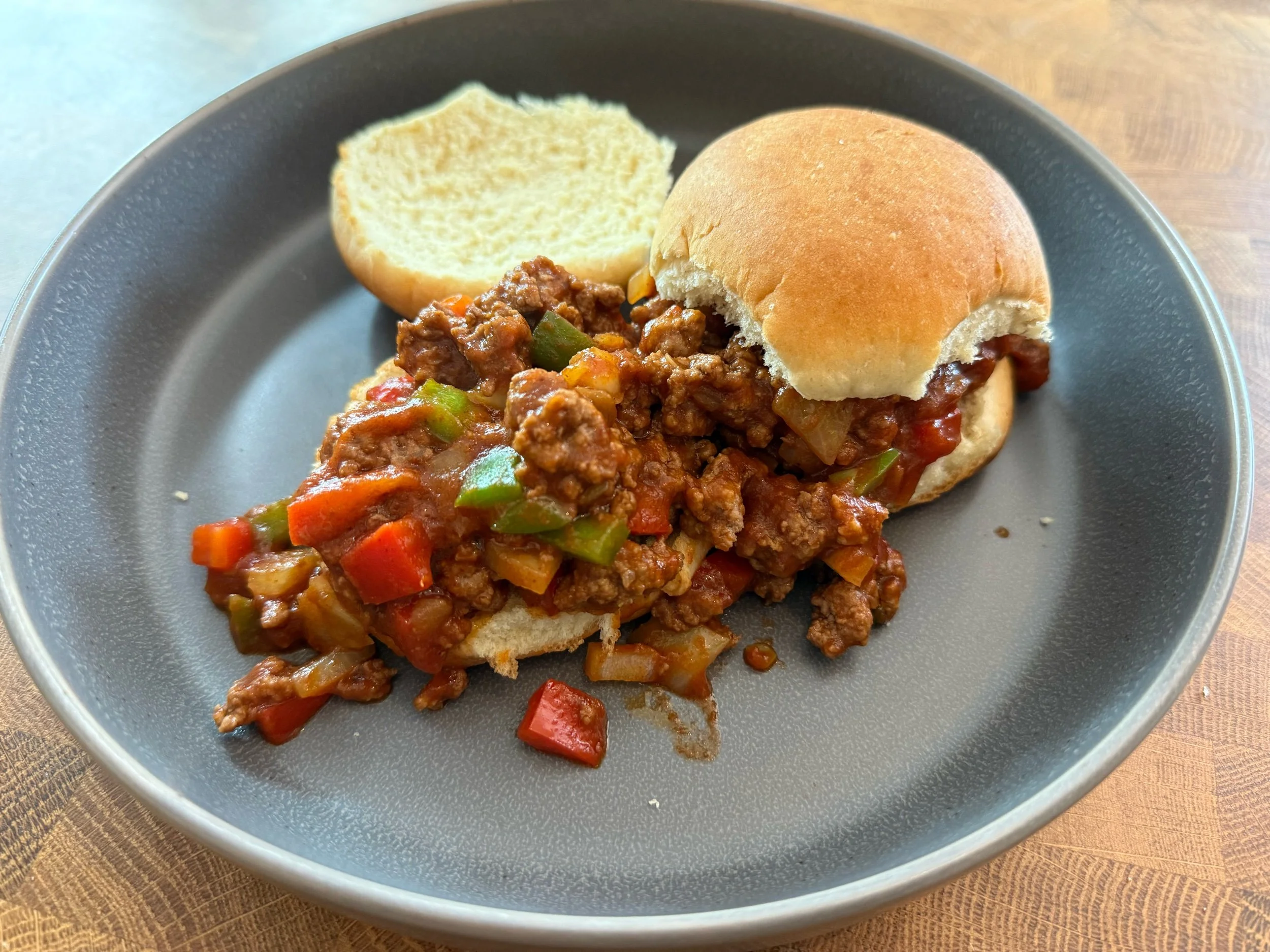
Hello and welcome to today’s episode of This Food in History! Today we are taking a gander at a food I have loved since I was a child, sloppy joes!
We always called it manwhich as a youngling as that was the name on the hunt’s can that we used to make it, but turns out it’s just a sloppy joe. So where did it come from, and how did it get its name?
Like so many other foods, this is one that has contested origins with a few variations for where it started. It definitely came about in the 1900s but three wildly different locations are claiming the origins of the sandwich. First up, we’ll go to the midwest United States, in Sioux City, Iowa. Here you can already find loose meat sandwiches, also called tavern sandwiches, which are ground beef on buns with other toppings like mustard, onions, and pickles.
I grew up calling these maid rites as they were sold under that name in my school growing up, and a town over had the famous Greenville Maid Rites shop with the Gum Wall. Turns out, that is a brand name and the sammy comes from Carroll Dietz of Missoula, Montana. She made the steam burger in 1920, and Floyd Angell turned it into a loose meat sandwich sold in his Maid Rite restaurant in Muscatine, Iowa, by 1926. David Heglan gave it the name tavern sandwich in his Sioux City restaurant in 1924. Abe Kaled renamed the restaurant after buying it when David died, to Ye Olde Tavern.
So these sandwiches gained a lot of popularity as they were cheap, easy to make, and good for fillers to stretch a batch more with bread crumbs, ketchup, cheese and then could be repurposed for meatballs or meatloaf or so. So how do we get to sloppy joes?
The legend goes that a chef at Floyd Angell’s restaurant was named Joe and made the dish by taking the loose meat sandwich and adding tomato sauce and seasoning to it. Marilyn Brown, who was a director of the consumer test kitchen at J.J. Heinz in Pittsburgh states they did research in the Carnegie Library that suggests Sioux City, chef Joe story is the origin. Ye Olde Tavern also gets the tap for maybe having Chef Joe on staff according to some sites I read. So at best, we know that a chef named Joe, came up with the dish to be economical while working either at Ye Olde Tavern, or with Floyd Angell.
The next origin, and the reason I am looking into this at all thanks to the Regulation Podcast starring Geoff Ramsey, Gavin Free, Andrew Panton, Eric Baudour, and Nick. Thanks to Geoff learning about the Sloppy Joe’s Restaurant live webcam in Key West, Florida and him creating Sloppy Joe’s bingo, I learned that this bar claims to be the original location that sold the sandwich. I decided to see what I could find out about it!
They are one of the top listed potential origins. Originally named Cayo Hueso (Bone Island), Key West is the last in a long series of islands off the coast of Florida and about 90 miles from Cuba. Renamed in 1822 it has a history of many cultures and historical sounding activities visiting. Shipbuilders from New England, Bahamian salvagers, pirates, Cuban cigar makers and more. Sloppy Joe’s started on December 5, 1933 as a saloon named the Blind Pig by owner Joe Russell.
Joe is Conch born, which means a native to Key West, named for a mollusk fished from the waters around Key West. He ran illegal speakeasies on the island during prohibition and opened the Blind Pig the day after Prohibition was repealed. He also was a charter boat captain as well and was the pilot and companion to Ernest Hemingway for over a dozen years. He knew the waters well as a rumrunner to Cuba for the best in whiskey and rum for the speakeasy. This money was then used to open the Blind Pig. It was open 24 hours and featured sawdust floors, pool tables, gambling and a policy to “come as you are and stay as long as you want” for customers. They added a dance floor and renamed it to the Silver Slipper.
The crowd and activities didn’t change. Ernest Hemingway (who called himself a co owner and silent partner) had a group of friends, the Mob, that were all regulars who spent many long days and nights in the bar. This included John Dos Passos, Waldo Pierce, JB Sullivan, Hamilton Adams, Captain Eddie Saunders, and Henry Strater.
Ernest was the one that convinced Joe to change the name to Sloppy Joe’s after one of his favorite haunts in Havana where he would go to drink during prohibition.
The bar gets its last name change, including an update to a specific loose meat sandwich on their menu to match the name. However, some reports also state that the sandwich was brought to Key West by Ernest who convinced Joe to add it to the menu and change the name of the bar. I did not find anything more on how they got the sandwich without it coming from the source of our third legend. So while the shop has a lot of fun stories (including one more where a rent dispute led to Joe and his patrons moving the entire saloon from its original location to its final resting place on Duval street, overnight under the landlord’s nose by picking everything up and walking. They didn’t even stop business, they just kept right on drinking as soon as they sat down in the new location), they are a little less credible as an origin story of the sloppy joe, though they may have at least been the first in America.
The last and potentially most credible source of Sloppy Joes comes out of Havana, Cuba. José Abeal Otero’s restaurant opened in 1917. This restaurant and bar operated during the American prohibition and became a hot spot for Americans with time, means, and sometimes fame. The list of celebs include the already mentioned Ernest Hemingway, Ava Gardner, Frank Sinatra, Joe Luis and more. Hemingway was a staunch regular here which is why he prodded Joe Russel to change the name to match and serve the sandwich that was made just for Americans like him.
José needed a dish to compliment the drinks for these Americans flocking to his place. Since Americans just love sandwiches he decided to adapt a Cuban dish, ropa vieja. Ropa vieja is a beef stew mixed with spices, tomatoes, and more. He adapted this to be handheld by putting it on bread and named it sloppy joe after his nickname from his regular American customers.
The bar shut down in 1959 after the Cuban revolution and reopened after a restoration by the City Historian Office in 2013. It is now run by Habaguanex Tourist Company but remains as a reminder of this iconic sandwich that has permeated American culture so deeply that it is believed to be an original. Just like Apple Pie, it isn’t as American as it seems.
The 1900s were good to Sloppy Joes though in America. After it was created and travelled to the states (or started there) it did spread wildly throughout the country. In the 1940s we started seeing it mentioned and marked in magazines. One such from Ohio in the Coshocton Tribune in an ad for the Hamburg shop that credits Cuba for the sandwich.
We also start seeing American cookbooks add the dish with other names like Toasted Deviled hamburgers, chopped meat sandwiches, spanish hamburgers, hamburg a la Creole, and more.
A 1952 article declared sloppy joes as a teenage favorite and is quoted as saying “when the teenage gang descends on your home for eats let it be Sloppy Joes and plenty of them.” Libby’s Barbecue sauce and Beef sloppy joe joined the market in the 1950s as a canned sloppy joe with the meat included. All you had to do was heat it and plate it.
In 1969, Hunts created the canned sloppy joe sauce that made the dish a kitchen staple as it drastically simplified the preparation and time. It was a one pan meal and they had the slogan “A sandwich is a sandwich but a manwhich is a meal” which is a name that stuck for their canned sauce. In 1977 they made a family sized version of the canned sauce and also an ad campaign targeting Black families in Ebony magazine, Ladies Home Journal, Family Circle, McCall’s, and Redbook.
The food also made its way into American school cafeterias where it remains to this day. It is believed to be due to the perception that it was a nutritious meal at a fraction of the cost of others. This gave it a bad rep as cafeteria food, but didn’t stop its popularity.
In the 90s, SNL had a skit with Adam Sandler and Chris Farley about cafeteria food that featured sloppy joe saving the day.
We have had variants pop up like we do most foods. Quebec has a similar version that is served in hot dog buns. Rhode Island has a similar sandwich called the dynamite that uses onions, bell peppers, and celery.
The American South calls them Sloppy Jim or Barbecue Sandwich that uses a bbq sauce instead of tomato to give it a unique flavor.
I do try to look more internationally for each dish and find mention of a couple similar ones.
Brazil has buraco quente which has a ground beef mixture in bread rolls, and Scotland has mince rolls that use minced beef and butter in a morning roll.
Sloppy Joes always bring a smile to my face and have a short history with a long legacy. It is likely not very American, but it has been adapted and spread to be a staple in the heart of the country and an experience most public school children all share.
This has been This Food in History. I’m Sofia, thank you for watching, please like and subscribe for more!
Cites:
https://quaintcooking.com/2019/10/09/history-of-sloppy-joes/
https://theawkwardtraveller.com/sloppy-joe-the-truth-behind-its-origins/
https://www.tastingtable.com/968736/the-controversial-origins-of-the-sloppy-joe/
https://www.rimping.com/blog/7641/sloppy-joe-american-burger
https://www.thetakeout.com/sloppy-joe-history-american-sandwiches-week-1830501155/
https://www.foodhistoryandculture.blog/post/history-of-sloppy-joe-sandwiches
https://havanatimes.org/cuba/havanas-famous-sloppy-joes-bar-falls-victim-to-apathy/
https://medium.com/@suxvr40rider/the-tavern-sandwich-sioux-citys-loose-meat-legacy-4daebabbd60a
https://www.tripadvisor.com/Restaurant_Review-g50402-d3389076-Reviews-Maid_Rite-Greenville_Ohio.html
https://www.under30experiences.com/blog/key-west-florida-your-guide-2
https://bahamabobsrumstyles.blogspot.com/2019/06/the-story-of-josie-russell-and-sloppy.html
https://library.cocktailkingdom.com/exh.figures.abeal_otero_jose.html
https://quaintcooking.com/2019/10/09/history-of-sloppy-joes/
https://www.sandwichtribunal.com/2015/12/woonsockets-dynamite-sloppy-joe-sandwich/