This Food in History #30 Elote
Hello and welcome to today’s episode of This Food in History. We’ll be gandering at a side dish I have become very attached to lately, elote or Mexican Street Corn as Americans know it by.
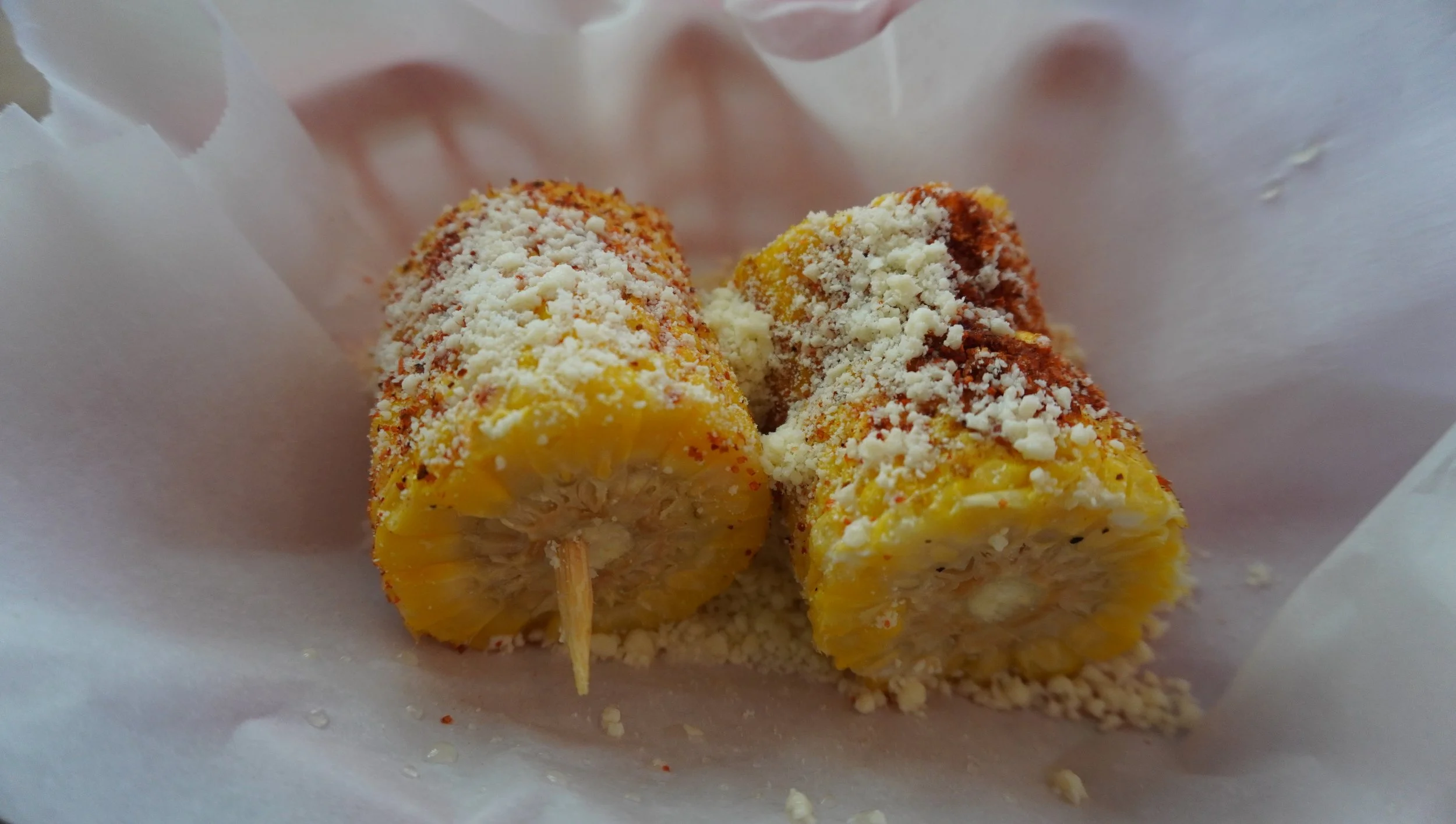
Most restaurants that have any Tex Mex or a Mexican food sections are likely to have a street corn option. Either as elote or esquites, the version where it’s off the cob and in a cup. While I have memories of seeing it on menus for a while, I only started ordering it in the last few years after a friend talked me into trying elote. I fell in love. I try it almost every time I see a restaurant that offers it so I can order the best one when I’m having a craving. Elote is a grilled corn cob slathered in a mayo and crema mixture, spiced with tajin, a dash of cilantro, topped with cotija cheese, and spritzed with a little lime.
Since I love this side dish, I of course wanted to know where it came from.
As we have been seeing recently, there is no singular origin story or name we can pull out of the annuals of history to credit. All the sites I looked at said pretty much the same thing. We need to start with the origin of corn.
Elote can be translated as corn, but those of us that read in public school also know there’s another word for it; maize. Maize can be traced back to Mesoamerica. One site gives the date of 6600 BCE in Honduras, while another states archaeological evidence puts it around 9000 BCE for domestication. Indigenous people cultivated the OG version of maize that was tiny, and rock hard into the vegetable that is eaten today. If you’ve ever gotten baby corn in a soup or salad, this is closer to the original size before selective breeding practices grew it to the two handed treat it is today.
The Olmecs, Mayans, Aztecs, and Toltec are getting the tap for cultivating maize in their civilizations. History tells us that it was a highly important vegetable in their societies. It was a staple in the diets and consumed in various forms, but also used spiritually, and culturally. Some believed maize to be a gift from gods, as it became very important to survival with its versatility. Maize was a symbol of life and fertility.
The heightened importance made maize influential in the economy. It was traded between communities to maintain peace. Some like the Mayan had a sacred book called the Popol Vuh, which presented a myth that the first man was made from corn. Even though squash, beans, and chili peppers are also present in the diets, only corn holds a place in founding myths and legends. Fun fact, there’s some old school slang used to avoid swearing. People would say “Hijo de tu maíz” or call people “hijos del maiz” which means son of a corn.
The Indigenous people had a close relationship with corn and even today you can find some festivals dedicated to the harvest that celebrate with dancing, ceremonies, fireworks, and more.
Corn obviously spread from Mexico northward as Tribes in the present day United States also grew and utilized corn in many ways. In fact, it has become associated with Native cultures in imagery used in public school history books and more. Growing up in the states, I learned about maize in relation to Native American tribes instead of Mexico. This is especially heinous as the word maize has origins from the native language Taino spoken by the original natives in Hispaniola. Spanish conquistadors stole the word.
By the 15th century corn had spread across North America, and in due time with trade, around the world as well. So how does this turn into Mexican Street Corn or elote?
We have evidence that the Aztecs and Mayans had various ways of cooking maize but one such method was grilling cobs over an open fire. This method is where we want to focus. While not every corn dish has survived the years, tamales, boiling corn, and grilling corn on the cob has. It would have been eaten plain or with salt. This easy method of cooking and eating corn travelled and made its way into cities as urbanization occurred.
During this same time, cultures are blending in Mexico with influences from the Spanish colonizers, African enslaved people, and Native tribes. Food is becoming more vibrant with this cultural blending and we start seeing a rise of street vendors. Elote is being sold on the streets in carts as an easy to prepare and beloved treat. Street food, also known as antojitos in Spanish which means little cravings, is also a competitive field. The plain version of elote needs to evolve and so vendors start playing with other tastes and ingredients. Some of these early versions were served with chili, lime and cheese.
This starts to evolve even more as new ingredients are brought to Mexico from Spain and new culinary techniques. We see cheese get added, butter, mayo, and crema slathered on as well and the addition of selling it on a stick for a hand held experience. Vendors and chefs alike start experimenting as everyone wants their own special take on elote. By the 20th century, elote had become a staple street food in Mexico City which likely contributes to the name Mexican Street Corn over Elote in the states.
These variants only grow with time and location as the north and other countries start getting in on the game. One such variant is esquites. Esquites, as mentioned, is the off the cob version where it is served in a cup. The corn is also prepared with chicken stock for a richer flavor.
In Northern Mexico you might find versions that use butter with the mayo for more richness. You might catch crusted hot chips or other spice toppings as well.
In the south, the mayo is replaced with crema, and queso fresco instead of cotija.
Coastal cities will use powdered shrimp or maybe other seafood as well thanks to bustling seafood markets.
Central Mexico has variants that use more chiles mixed with lime and salsas added on top.
In the states, you have chefs trying to be gourmet with elote so you might find things like specialty cheese, truffle oil, jalapeños, or salsas.
Elote is in the end a corn side dish with many spicy, sour, and dairy toppings that get used to create a tasting experience. It holds a lot of history and culture inside it though, no matter how simple it may seem. The history of corn that is unique to Mexican Indigenous peoples and the blending of cultures to make a modern flavor that preserves tradition and evolves with the people as they are shaped by colonizers and more. Elote is uniquely Mexican no matter who tries to dress it up differently and is a staple in the streets where it evolved.
This has been This Food in History, I’m Sofia, thank you for watching, please like and subscribe for more!
Cites:
https://www.tijuanaflats.com/blog/mexican-street-corn-elote-guide
https://feedlotbbq.com/blogs/beyond-the-flame/the-delicious-history-of-elote-corn
https://www.forbes.com/sites/bradjaphe/2018/04/30/a-brief-history-of-mexicos-love-affair-with-corn/
https://www.maestrotacos.com/s/stories/elote-a-journey-through-time-and-flavor
https://www.howtocook.recipes/mexican-street-corn-the-cultural-significance-of-the-elote-recipe/
https://zamzows.com/blogs/the-zamzows-table/zamzows-table-elote-aka-street-corn
https://mexiconewsdaily.com/food/taste-of-mexico-elote-corn/
https://www.ohmexicorestaurant.com/newsroom/what-is-mexican-strees-corn/
https://www.grillagrills.com/recipe/Elote%20-%20Mexican%20Street%20Corn